Three Material Families, One Testing Visit
Federal workplace rules draw a useful line here: OSHA treats thermal system insulation, surfacing material, and resilient flooring installed before 1981 as "presumed asbestos-containing" until testing shows otherwise. That presumption exists because these categories tested positive so often. For homeowners the takeaway is simpler — if any of the materials below predate your memory of the house, sample before you demo.
Vinyl flooring & mastic
The famous 9×9-inch tiles, many 12×12 tiles through the early 1980s, sheet vinyl with felt backing — and the black cutback adhesive under all of them. Multiple layers are common in older Boise kitchens, where each remodel floored straight over the last.
Transite siding & flues
Cement-asbestos board pressed into shingles, corrugated panels, and the gray flue pipes venting old furnaces and water heaters. Durable for decades — which is why so much of it is still on and in Treasure Valley houses.
Pipe & duct insulation
Chalky white or gray wrap on heating pipes, corrugated air-cell lagging, troweled "mud" at elbows and joints, and paper-like tape on old ductwork. Frequently found in North End and Nampa basements that still host — or once hosted — a boiler or gravity furnace.
"It's Non-Friable, So It's Fine" — Almost
Intact floor tile and cement siding are non-friable: the asbestos is locked in a binder and doesn't shed fibers while the material just sits there. That's genuinely good news, and it's why regulators don't treat an undamaged transite-sided house as an emergency.
The catch is what renovation does. Snapping tile out of brittle mastic, grinding adhesive off a slab, cutting siding with a circular saw, sanding, drilling, breaking transite flue sections for a furnace swap — every one of those turns a stable material into dust. Regulations recognize this too: non-friable material that has been crumbled or pulverized gets regulated like friable material. So the sequence matters. Test first, then choose removal methods based on what the lab says, not the other way around.
Pipe insulation is the exception in this trio — much of it is friable as installed, damaged by decades of bumps and moisture, and among the highest-priority materials to test in any pre-1990 basement or crawlspace.
What Sampling Looks Like for Hard Materials
Identify every layer
Flooring hides its history vertically: tile over tile over sheet vinyl over mastic. The inspector documents each layer as its own material, because any one of them can be the positive.
Wet, contained sampling
Small pieces are removed with hand tools at damp, controlled points — a corner of a closet floor, a siding edge behind a downspout — and sealed on the spot. Sample scars are minor and typically invisible after the project.
Accredited analysis, layer by layer
The NVLAP-accredited lab reports each layer separately: the tile can be clean while the mastic is positive, or the reverse. That granularity changes removal plans and budgets.
A remodel-ready report
Your flooring installer, siding crew, or HVAC contractor gets exact answers about what they're allowed to rip out normally and what needs abatement handling first.
Common Treasure Valley Scenarios
- Bench ranch kitchen refresh. New LVP over the old floor? If the existing layers stay intact and covered, testing may still be smart for the record — but if anything gets demolished or leveled, test the stack first.
- Old Nampa bungalow residing. Gray, brittle shingle siding under vinyl cladding is classic transite territory. Testing tells the crew whether standard tear-off rules apply.
- North End basement conversion. Wrapped pipes overhead and a retired flue in the corner are the first two samples any inspector will suggest before framing begins.
- Furnace replacement anywhere in the valley. HVAC contractors regularly stop work when they meet suspect flue pipe or duct tape wrap. A pre-test keeps the install on schedule.
Reading a Floor's History Before You Open It
You can't diagnose a floor by eye, but you can gather clues that sharpen the quote and the sampling plan:
- Tile size is a hint, not a verdict. The 9×9 format is strongly associated with the asbestos era, but 12×12 tile was made both with and without asbestos into the early 1980s — which is why both get sampled in older homes.
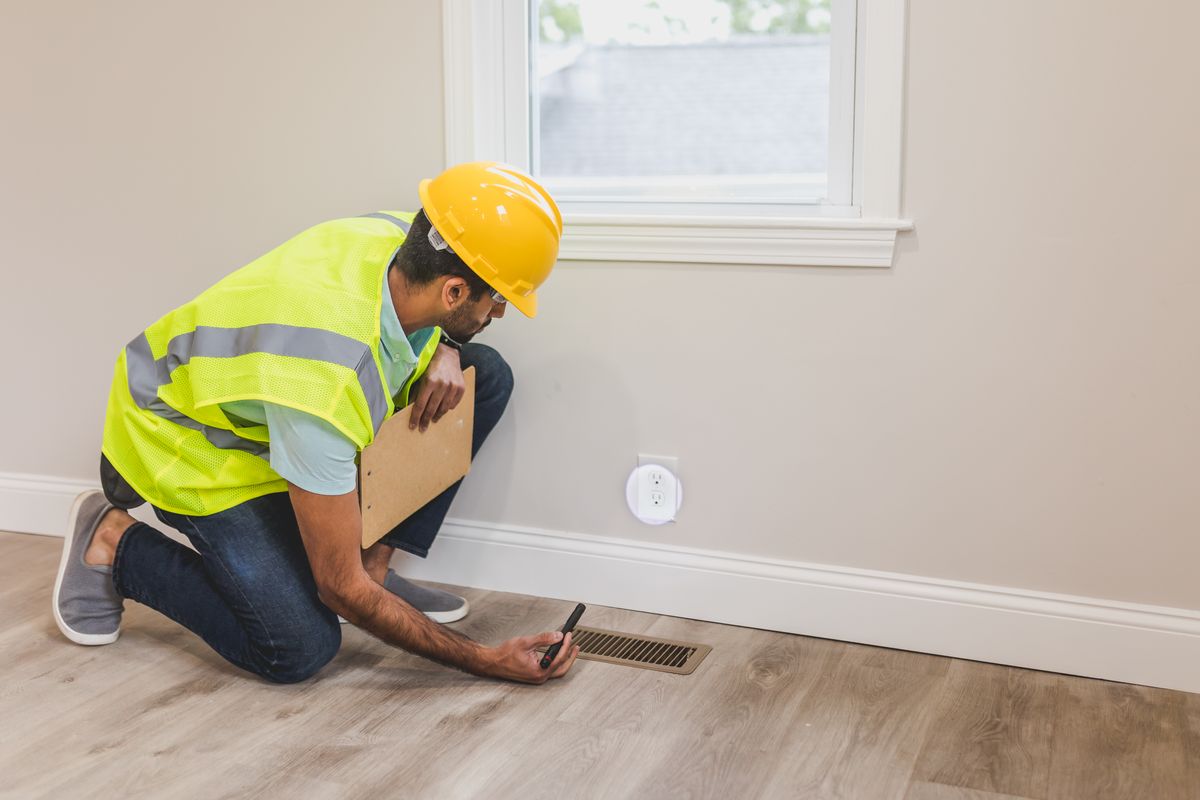
- Check registers and closets. Lifting a floor vent or peeking under carpet in a closet corner often reveals the layer stack without disturbing anything — count the layers you can see and report them when you call.
- Black adhesive is a flag of its own. Cutback mastic frequently tested positive even under tile that didn't, so the adhesive is always sampled as a separate material.
- Basement floors deserve equal attention. Tile laid directly on Boise-area basement slabs through the 1970s is one of the most common positives inspectors see.
If You're Keeping the Siding, Not Removing It
Plenty of Treasure Valley owners like their cement-asbestos siding — it holds paint well and shrugs off weather that destroys wood. Keeping it is a legitimate plan, with two caveats worth knowing. First, maintenance methods matter: repaint with brush or roller after gentle washing, never sand or dry-scrape it smooth, and never blast it with high-pressure washing that erodes the surface. Second, repairs mean matching, and matching means knowing — replacement panels are modern fiber-cement, so a test documenting what's on the wall tells your contractor which sections need careful handling and which are already replacements. A siding test is cheap context for decades of ownership.
Flooring, Siding & Pipe Questions
The tile is only in one room. How many samples does that take?
Usually a small set per distinct material — the tile is one material, the mastic beneath it another, and a second flooring layer a third. Your quote will itemize each. See the cost guide for typical totals.
Can I encapsulate old tile instead of removing it?
Often yes — floating a new floor over intact tile is a recognized management approach and avoids disturbance entirely. It works best when you know what's under there, so the decision (and the disclosure, at resale) rests on a lab result.
Is transite siding dangerous just hanging on the house?
Intact and painted, cement-asbestos siding is generally considered low-risk because the fibers are bound in cement. The concern is cutting, breaking, sanding, or pressure-blasting it — and demolition. Test before any of those, and never power-wash it bare.
We found crumbling white pipe wrap. Should we stop the project?
Pause work in that area, keep people and airflow away from the debris, and don't sweep or vacuum it. Damaged thermal insulation is the textbook case for prompt professional sampling — call and mention what you're seeing.
Testing several materials in one visit is the economical route — pair this page's materials with a ceiling texture check or fold everything into a full pre-renovation survey when the project is bigger than one room.
Know Every Layer Before Demo Day
Tile, mastic, siding, pipe wrap — one visit, one lab, one clear report. Quotes are free.